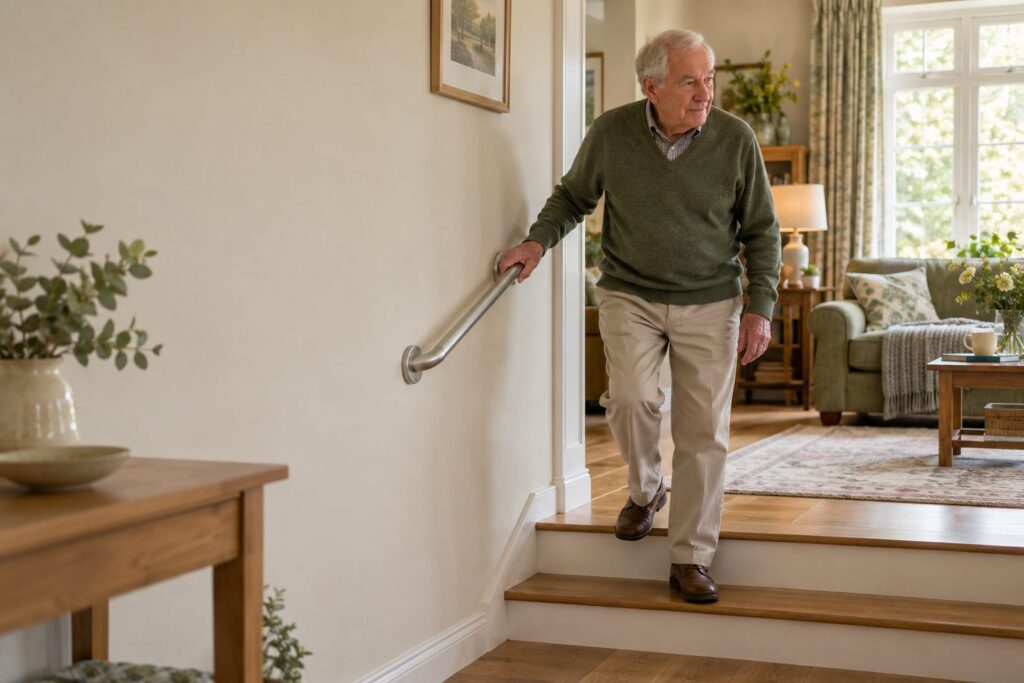
Helping You Stay Independent at Home
As we get older, everyday tasks can sometimes become more challenging. Fortunately, there are many practical solutions that can make life easier without the need to move into residential care.
Home adaptations and assistive technology are designed to improve safety, reduce the risk of falls and give both older people and their families greater peace of mind.
Many adaptations are simple, affordable and can make a significant difference to everyday life.
What Are Home Adaptations?
Home adaptations are physical changes made to a property to improve accessibility and safety.
Depending on your needs, these might include:
- Grab rails in bathrooms and hallways
- Handrails on stairs
- Ramps for easier access
- Walk-in showers or wet rooms
- Bath lifts
- Raised toilet seats
- Stairlifts
- Improved lighting
- Non-slip flooring
- Wider doorways for wheelchair access
Some adaptations can be installed quickly, while larger changes may require professional assessment and planning.
What is Assistive Technology?
Assistive technology includes devices designed to help people live more safely and independently at home.
Examples include:
- Personal pendant alarms
- Fall detectors
- Medication reminder devices
- Smart pill dispensers
- Smoke and carbon monoxide alarms
- Video doorbells
- Motion sensors
- GPS location devices for people living with dementia
- Smart home technology, including voice assistants
- Automatic lighting and heating controls
Many of these devices can also provide reassurance to family members by helping them stay connected and alerted if something goes wrong.
Everyday Living Aids
There are thousands of products designed to make everyday activities easier.
These include:
- Easy-grip kitchen utensils
- Jar and bottle openers
- Kettle tippers
- Reaching aids
- Dressing aids
- Button hooks
- Long-handled shoehorns
- Walking sticks and walking frames
- Adjustable chairs
- Overbed and chair tables
The right equipment can help people continue carrying out everyday tasks independently for much longer.
Funding for Home Adaptations
Some home adaptations may be funded or part-funded depending on your circumstances.
You may be eligible for support through:
- Your local authority
- An Occupational Therapy assessment
- Disabled Facilities Grants (where available)
- NHS services for certain equipment
Eligibility depends on your individual needs and financial circumstances, so it’s always worth asking what support may be available before paying privately.
Choosing the Right Solution
Everyone’s needs are different.
Before purchasing equipment or making significant changes to your home, consider:
- Which daily activities are becoming difficult?
- Are there any safety concerns, such as falls?
- Will your needs change over time?
- Would professional advice be beneficial?
- Could simple adaptations prevent the need for more intensive care later?
An Occupational Therapist or healthcare professional can often recommend the most suitable solutions for your individual circumstances.
Practical Tips
If you’re thinking about making changes at home, here are a few simple steps to get started:
✓ Walk through the home and identify any potential trip hazards.
✓ Improve lighting in hallways, staircases and entrances.
✓ Remove loose rugs and trailing cables.
✓ Consider installing grab rails in bathrooms.
✓ Explore personal alarm systems for added reassurance.
✓ Ask your GP or local authority whether an Occupational Therapy assessment is appropriate.
Small improvements today can help prevent accidents and make everyday life easier.
How Elderly Support Solutions Can Help
Remaining independent at home is important to many older people and their families.
Elderly Support Solutions provides practical advice to help you understand the different options available, alongside our directory of trusted care providers and support services across Lancashire.
Whether you’re looking for home care, mobility support, specialist equipment or advice on planning ahead, we’re here to help you find the information and services you need.